Shop

The Road Less Traveled, Revisited: Two Roads’ Bold Bet on Brewing Belgium’s Legendary PALM
Two roads diverged in the craft beer woods, and Two Roads Brewing has never hesitated to take the one with fewer footprints—and better beer at the end of it. From day one, the Connecticut brewery has built its identity around zigging when others zag, honoring tradition while quietly rewriting the rules. Sometimes that means dry-hopping a pilsner before anyone has a name for it. Other times, it means knocking on the door of a legendary Belgian brewery.
Enter PALM from Brouwerij Palm in Steenhuffel, Belgium, which Two Roads has licensed to brew and market in the U.S. this year.
Once a familiar sight on the East Coast, this iconic Belgian amber ale disappeared from U.S. shelves several years ago. But as American drinkers have once again craved balance over bitterness and flavor over new hoppy heights, the timing feels right for a comeback. And there may be no better partner to bring PALM back than Two Roads—led by a brewer who literally wrote the book on Belgian styles and a business model that has emphasized bringing brands to life right from the start.
This isn’t a reboot. It’s an honorary homecoming. From months of meticulous pilot batches to dialing in fermentation down to the smallest detail, Two Roads approached brewing PALM with equal parts reverence and confidence.
The result?
A beer that feels timeless, drinkable, and refreshingly in step with a turning tide, while taking the road less traveled by.
The Road Less Traveled from Belgium to Connecticut
Photography courtesy of Two Roads Brewing Company
Somewhere ages and ages hence:
Two roads diverged in a wood, and I—
I took the one less traveled by,
And that has made all the difference.
–Excerpt from Robert Frost’s poem “The Road Not Taken.”
Two Roads has never driven on the straightest paved road. And that’s always been intentional, right from the very beginning.
“The ethos here is ‘The Road Less Traveled,’” says Two Roads Co-Founder Brad Hittle, who, as a youth, read the famous poem “The Road Not Taken” by Robert Frost and has revered its penultimate closing lines ever since.
Hittle says folks ask all the time where he came up with the name “Two Roads.”
Is it the two roads in front of the brewery?
“That’s a good guess,” says Hittle, who loves saying no before explaining the true meaning.
Taking the road less traveled can mean many things, but for us it’s “zigging where others zag,” says Hittle, who worked with brands like Rolling Rock and Pabst before starting Two Roads. “We were always underdogs, small brands, and we had to think that way to succeed.”
When Hittle started Two Roads in 2012, he intentionally opened with a unique model, building a larger brewery with the best equipment so that half the business could attract contract customers while the other half brewed its own brand of beer.
Over the last 13+ years, Two Roads has contract-brewed dozens of highly regarded brands,
All helmed by Two Roads Head Brewmaster and Co-Founder Phil Markowski, who approaches brewing with “a combination of paying a healthy respect for established beer styles … while having some unique spin on it that makes it our own.”
For instance, Markowski dry-hopped Two Roads pilsner long before he’d ever heard the term “Italian pilsner,” a style that emerged several years ago in Europe, adding a dry hop to a traditional German pilsner.
“We were a few years ahead of the curve,” he says.
Or a hefeweizen that deploys a small amount of unusual cereal grains like rye and spelt, an ancient grain. “We introduced these different things into a classic style, not out of disrespect,” explains Markowski, “but out of trying to add a new and interesting element to the beer.”
I took the one less traveled by, and that has made all the difference.
For Two Roads, that difference has always shown up in the glass—beers rooted in tradition, thoughtfully reimagined, and built for balance and drinkability above all else, according to Markowski, who says, “In the end, you want people to drink and enjoy their beer and come back for it again and again.”
It’s a philosophy that has quietly guided every Two Roads brand. And now, it’s the same philosophy that led Two Roads down an unexpected path across the Atlantic—toward an iconic Belgian amber ale that feels both timeless and right on time.
In the PALM of Your Hand
Photography courtesy of Two Roads Brewing Company
While Two Roads has an extensive history of collaborating with iconic American brands, Hittle says the Connecticut-based brewery believes it has identified a unique opportunity to attract classic imports to be made and marketed by Two Roads. “PALM is the perfect start to this initiative. It’s a hidden gem with instant awareness, a beautiful, balanced liquid, authenticity, and a timeless logo that is a big fat bullseye on the shelf. And consumers get to enjoy a much fresher beer, having been made in CT. It’s hard to imagine a better combination.”
“The liquid is really good,” says Hittle, noting it’s also a style right up Markowski’s alley since he wrote the book on Belgian farmhouse ales. Currently not available in the United States, PALM was widely distributed mostly along the East Coast during its heyday, with almost 250,000 cases at its peak, according to Hittle. But, as with other international brands, a mix of economic and geopolitical challenges forced Brouwerij Palm to withdraw from distribution in the States.
Inspired by Markowski’s history with Belgian ales and by PALM’s prior success, Two Roads approached Brouwerij Palm to pitch a strategic partnership.
“They loved it!” says Hittle. “We both couldn’t be more excited about reintroducing PALM in the U.S.”
Honoring a Belgian Icon, One Fermentation at a Time
Photography courtesy of Two Roads Brewing Company
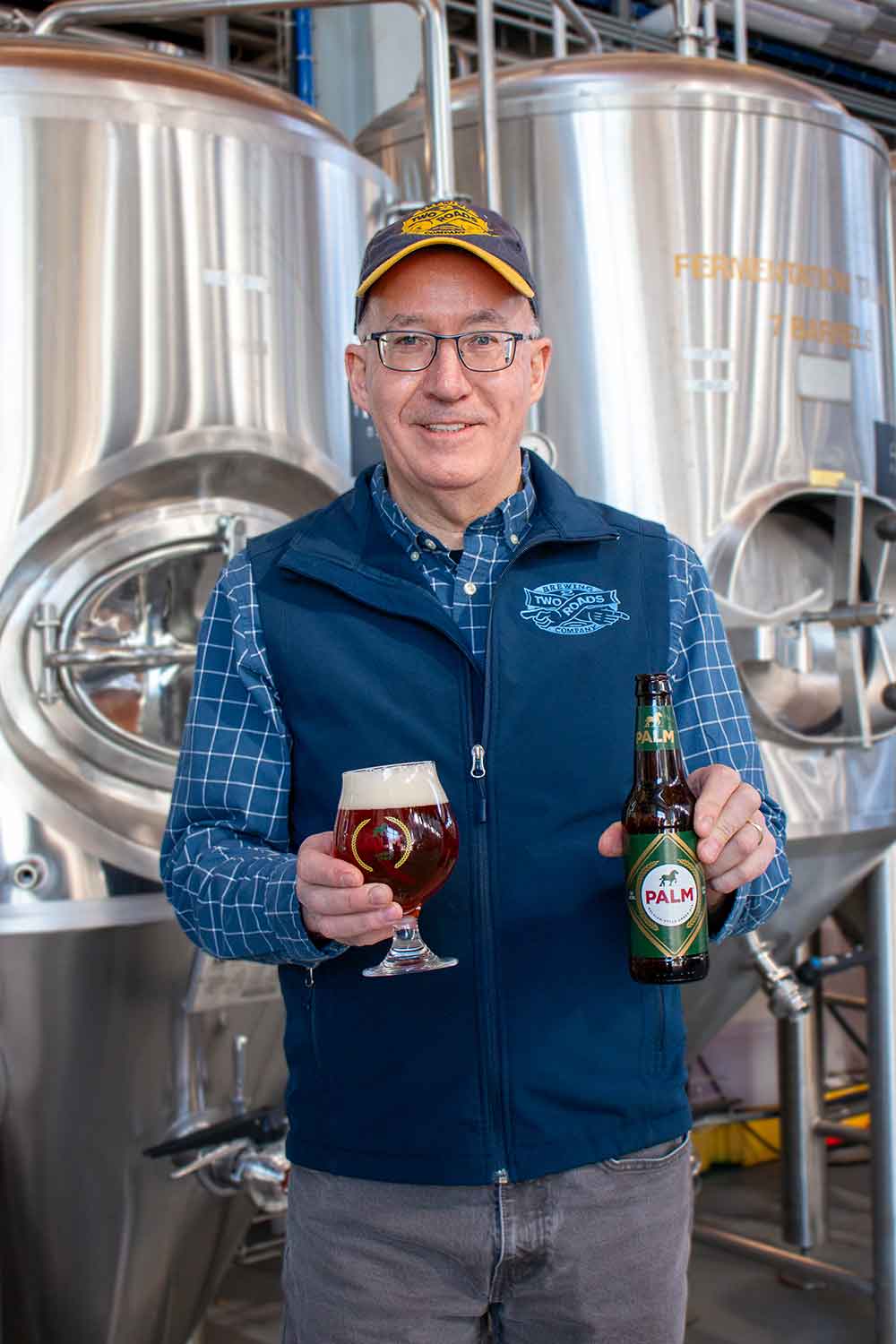
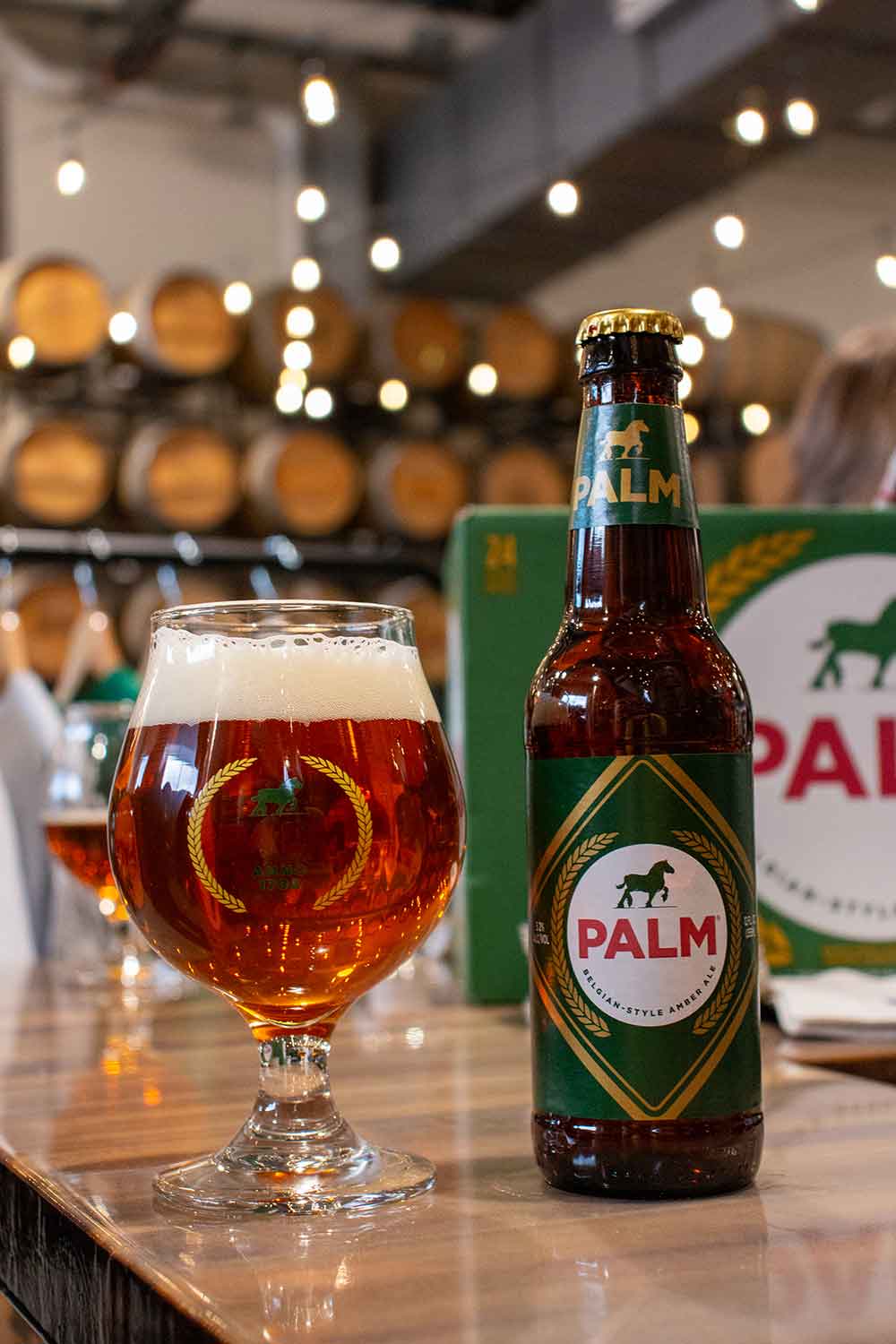
For those who have never heard of PALM, it’s an iconic Belgian amber ale.
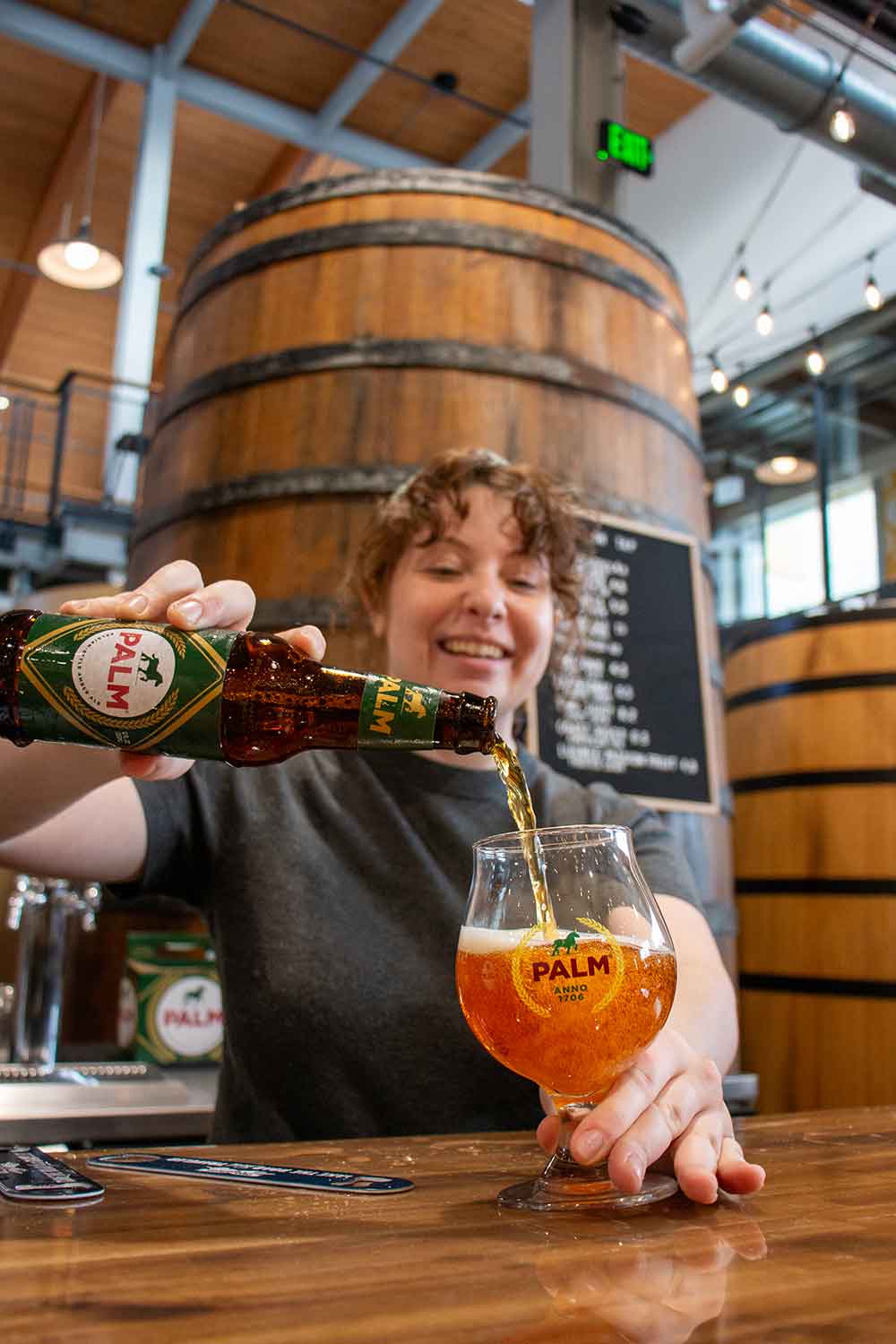
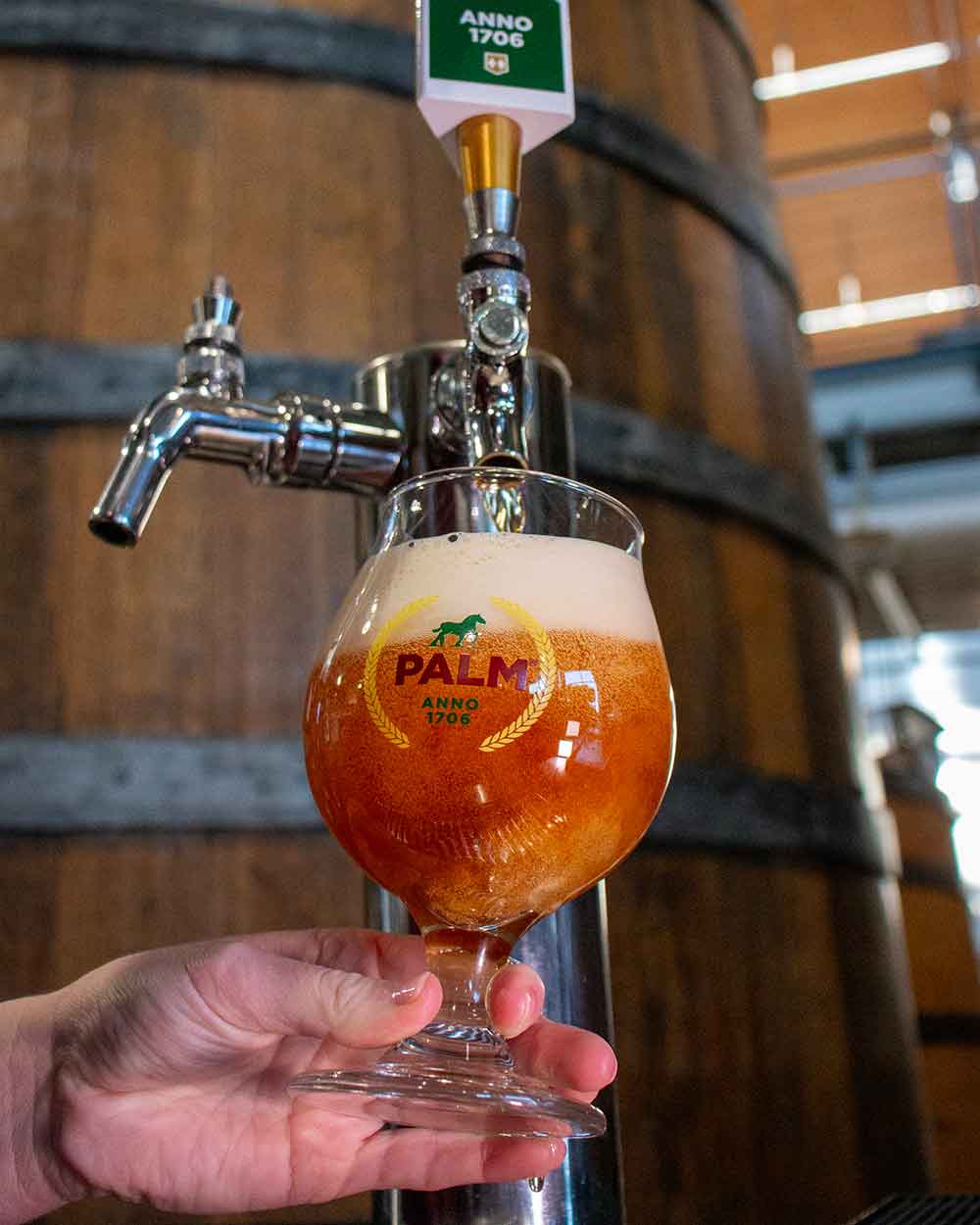
“It is a real crowd-pleaser,” explains Markowski. “It’s not too extreme on any end. It’s got pleasant fruity characteristics, including tropical fruits, bananas, some stone fruit, some caramel malt, some toasted malt.” The well-known brewing veteran who espouses balance over everything in brewing adds, “It’s just really drinkable and pleasant … every flavor works in concert with each other to create an easy-to-drink, very enjoyable beer.”
The long-time brewer, who tried his first PALM in the ‘80s, sees this project as “a dream come true.” “I’ve admired Belgian beers, tried to replicate them for decades,” says Markowski, who struggled to find the right word to fit his feelings. “Homecoming is a strong word, but it has that air to it because Belgium is where I first discovered flavorful, characterful beers.”
Now, with a Belgian brewery knocking at Two Roads’ door in Connecticut, Markowski feels honored and inspired.
He’s carried this reverence throughout the entire project and feels he and Two Roads have a responsibility to produce PALM as close to the original as possible. He says Brouwerij Palm gave them a lot of sensory and physical parameters to target.
Following their good guidance, Markowski first brewed a batch on Two Roads’ 200-gallon pilot system. He liked it, but felt they could do better. The second batch felt close enough for Markowski to send Brouwerij Palm samples. They liked it. But Markowski still felt he could do better.
Tinkering and tweaking lasted around six months before Markowski felt happy. As with most Belgian beers, Markowski emphasizes that while the malts and hops are important, it’s the yeast that truly drives flavor in this beer. “A lot of the tropical and stone fruit character comes from the yeast,” explains Markowski. “The malt and hops here are important, but they’re playing a supporting role next to the yeast.” So much of the dialing in came from fermentation techniques and the amount of yeast used, for example.
Markowski, who, according to Hittle, can only be described as a perfectionist, noted that replicating a recipe is a complex puzzle to put together with different equipment and water. “There will always be very, very slight differences, but we got to the point where it was difficult to tell the difference between our batch and theirs.”
An IPA Monolith Cracking, A Belgian Amber Shining Through
Photography courtesy of Two Roads Brewing Company
You might ask Two Roads why they even feel the need to brew an iconic European-style amber ale, when juicy, hoppy ales seem to be all American palates crave.
The answer is simple, actually.
The timing feels right.
Hittle says they’re seeing a perceptible shift in consumer demand for more balanced beers with lower BUs and some drinkability.
“What I love about PALM is that it does have a lot of drinkability, but the intensity of the flavors is really strong, and I think that’s appealing,” he says. “You get tremendous flavor and low bitterness that’s nicely balanced with the malt.”
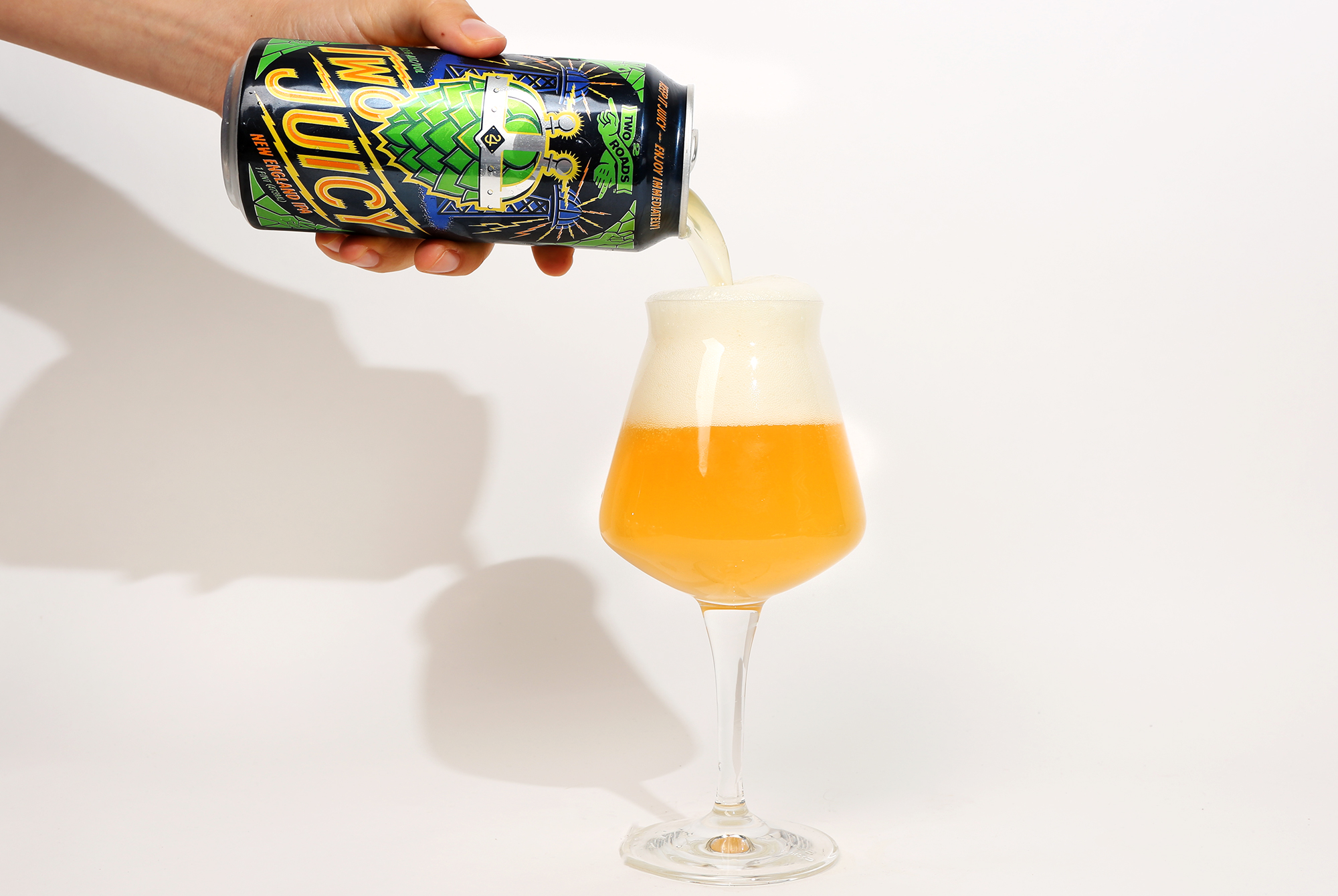
In contrast to the hazy, juicy IPAs, which have captured Americans’ taste buds for the last seven or eight years, this Belgian amber ale, in many ways, represents the future by taking a step back to the past.
“Hazy IPAs are almost all that most consumers have wanted,” says Markowski. “But the monolith of juicy IPAs is starting to crumble. … People are asking for something different.”
Funny how when seeking something different, we turn to the past. Amber ales, as a style category, seem like a throwback to the early days of craft brewing in the U.S. (Fat Tire, anyone?!)
Thirty years ago, in a sea of pale, golden fizz, a garnet-colored beer stood out like a lighthouse beam cutting through the fog. Amber ales became synonymous with small-scale craft breweries, explains Markowski. “This is perhaps a full-circle moment back to those early days of craft brewing.”
Global Roads: Taking the Long Road Forward
Hittle hopes that bringing PALM back to the U.S. is just the beginning for Two Roads, which plans to open up a new branch of the brewery called Global Roads.
Under this nascent division, Two Roads will seek other European or Asian beverage brands interested in strategically partnering with the East Coast brewery to bring products to the U.S.
Hittle says they’re aiming to keep Global Roads to three or four core brands that “can stand up on their own in terms of quality, uniqueness, and heritage, but just need us to shepherd sales, marketing, and production in the States,” he says. “We’re not looking to add a huge number of brands; we’re just looking for the right ones to nurture and grow.”
Where Can I Find PALM?
Photography courtesy of Two Roads Brewing Company
Much like PALM’s original market, Two Roads will first distribute this Belgian amber ale on the East Coast, including Connecticut, Rhode Island, and New York City, with other East Coast states to follow in the next few months.
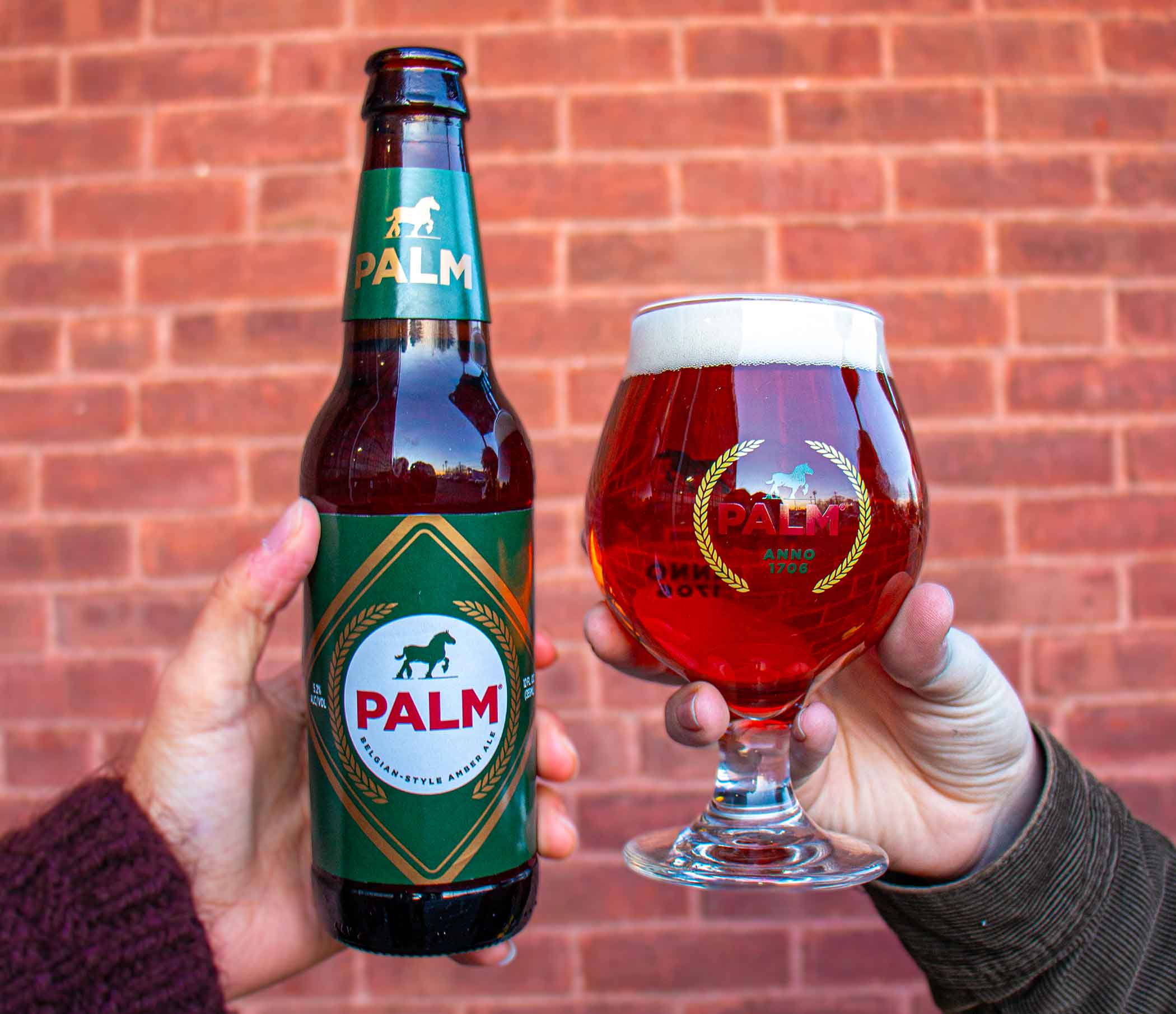
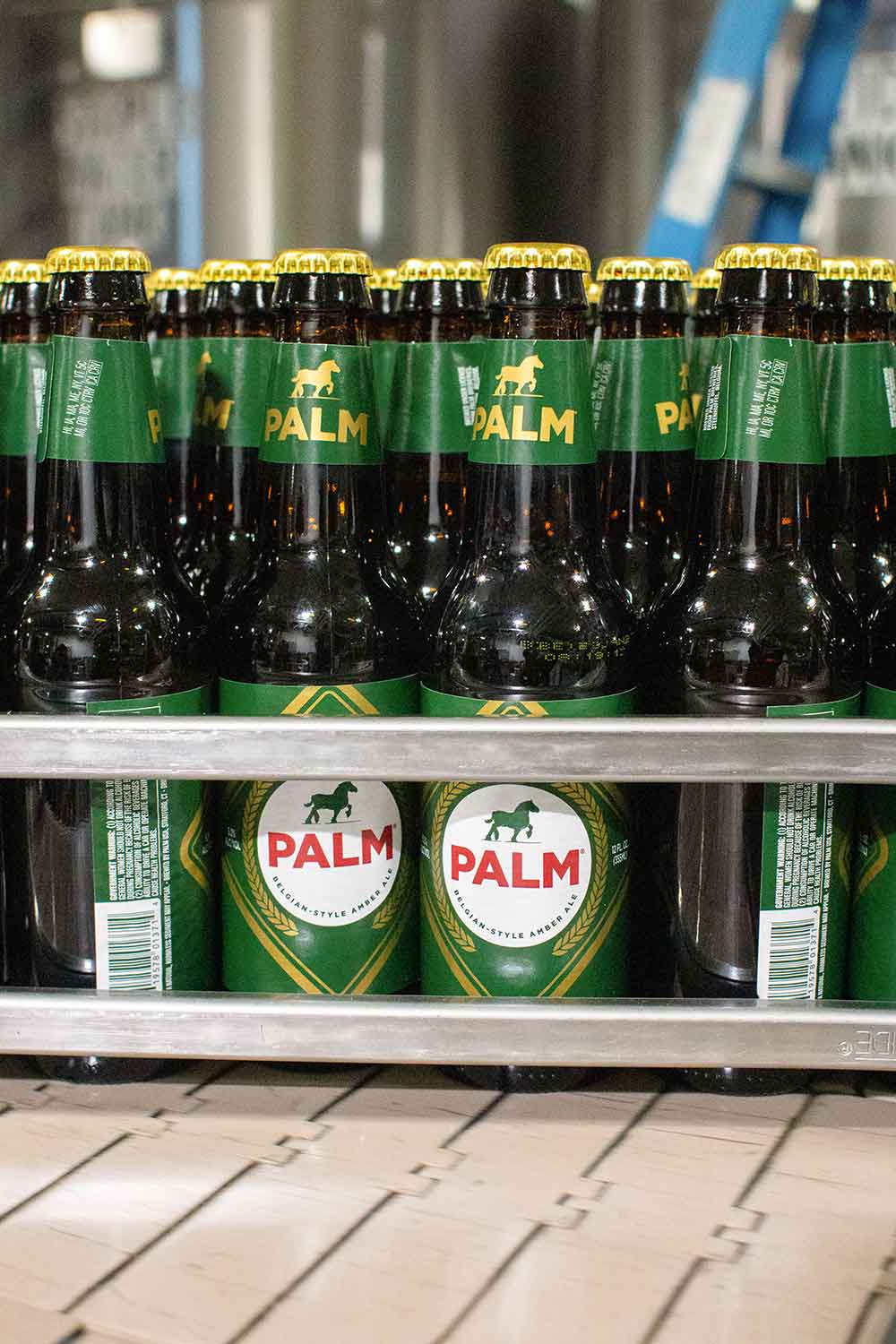
Hittle says to look out for PALM’s iconic graphics on the shelves, which he describes as bold and simple with a beautiful diamond shape and classic bullseye label. Two Roads has added a few premium cues, like swapping white for gold, but will keep the packaging similar to the original overall.
“It’s a timeless brand,” explains Hittle. “For those who’ve already had it, they’ll fall in love again. For those who are looking for something that isn’t a palate-busting IPA, those looking for balance, this is a great opportunity!”
Editor’s Note: This piece was written in collaboration with our friends at Two Roads

About The Author
Grace Lee-Weitz
Currently Drinking:
Fort Point Beer Co. KSA
Grace is the Senior Content Editor for Hop Culture and Untappd. She also organizes and produces the largest weeklong women, femme-identifying, and non-binary folx in craft beer festival in the country, Beers With(out) Beards, and the first-ever festival celebrating the colorful, vibrant voices in the queer community in craft beer, Queer Beer. An avid craft beer nerd Grace always found a way to work with beer. After graduating with a journalism degree from Northwestern University, she attended culinary school before working in restaurant management. She moonlighted as a brand ambassador at 3 Sheeps Brewing Co. on the weekends before moving into the beer industry full-time as an account coordinator at 5 Rabbit Cerveceria. Grace holds her Masters degree in the Food Studies program at NYU.