Shop

5-Minute Guide to Pairing Flemish Food With Belgian Beers
Celebrating Belgian beer culture.
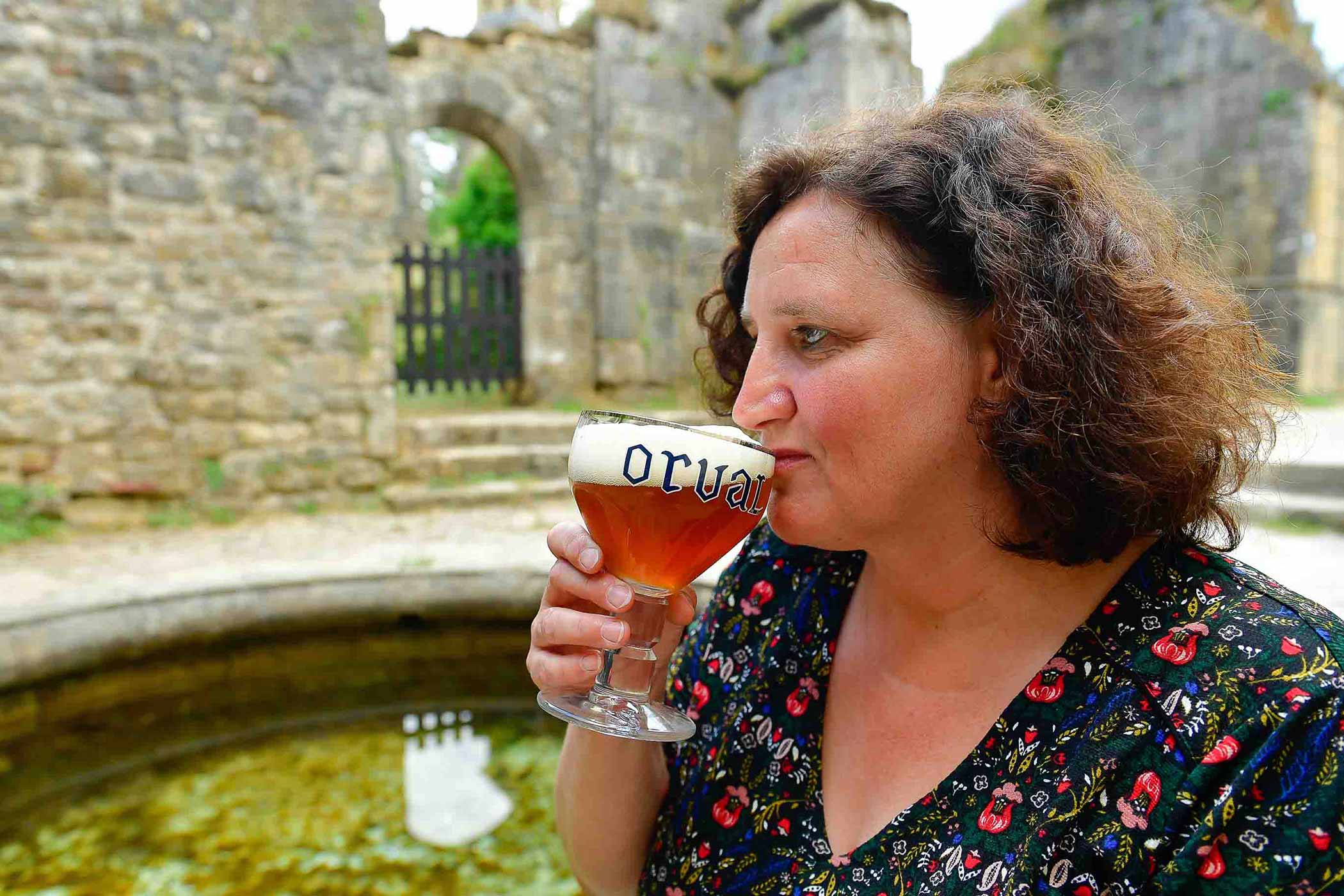
Belgium’s beer culture is world-renowned. In fact, Belgian Beer Culture was inscribed on UNESCO’s Representative List of the Intangible Cultural Heritage of Humanity in 2016, recognizing the country’s unique brewing traditions and beer gastronomy.
In Belgium, beer isn’t just a liquid; it’s a piece of the country’s history, a part of its DNA as important to the daily life and the social fabric as water (maybe even more!). With hundreds of breweries founded by families, farmers, and monks, who still use centuries-old brewing techniques, Belgium’s unique beer styles span a colorful historical timeline.
Belgium’s beer repertoire includes Trappist and Abbey beers made by monks—like the single, rich, malty dubbel, and spicy, strong tripel—unfiltered, cloudy wheat beers called witbiers, funky farmhouse saisons, complex, sour lambic and geuze, and uniquely brown ales called oud bruin.
Celebrating its tenth anniversary in 2026, Belgian Beer Culture has reached a major milestone, recognizable now around the world.
“This ten-year anniversary of recognition of the Belgian Beer Culture by UNESCO reminds us that Belgian beer isn’t just about what’s in the glass,” says VISITFLANDERS Trade & Partnerships Manager, North America, Marco Frank. “It’s about the people, the stories, and the traditions we share. It’s a source of pride that connects generations and brings communities together.”
But to truly understand this historic piece of Belgian history, you have to experience how those beers are enjoyed at the table. In Flanders, food and beer have evolved side by side for centuries, creating pairings that celebrate seasonality, local ingredients, and regional traditions.
But much like cooking and brewing, pairing the right beer with each traditional Flemish dish is a sprinkling of science and a dash of art.
We’re by no means experts in Flanders heritage, so to dish up the perfect Flemish food and beer pairings, we spoke with HOP Gastrobar chef and owner Bram Verbeken.
Verbeken, who started working as a waiter back when he was just a student, always knew he wanted to become a professional in a kitchen.
“Every time, it’s like a Mission Impossible,” he says of being a chef. After moving into the kitchen at a classic French restaurant, Verbeken traveled, cooking in places all across Belgium.
In 2018, he opened HOP Gastrobar in Leuven, a Flemish, brewery-packed city about 18 miles (30km) east of Brussels.
The open-kitchen restaurant focuses first on seasonality, handmaking everything from scratch right in front of its guests. “It’s really honest and open,” says Verbeken.
And uniquely, instead of showcasing wine (although that is available), Verbeken focuses specifically on beer pairings.
“There were some restaurants that had beers on the list, but usually, they were a bit dusty, classical choices,” he says, noting the whole idea with HOP was to really pair the beer with the food.
The seasoned chef forms dishes around how sipping on a saison, geuze, or even oud bruin can complement his cuisine.
It’s this beer-first approach that makes Verbeken an excellent guide here and champion for the entire Flemish region.
First, What Is Flanders?
Photography courtesy of Visit Flanders
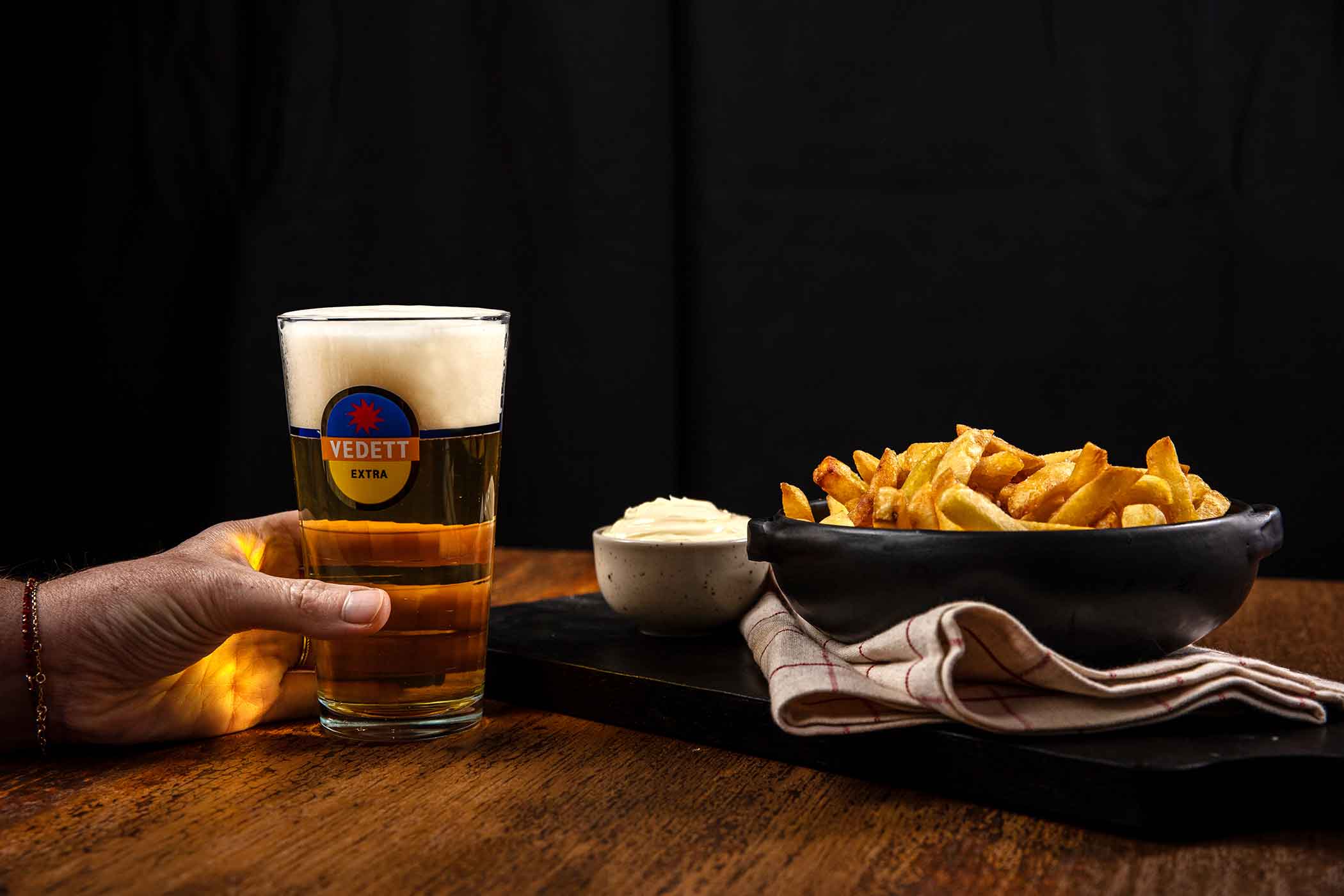
A fairly small region in Northern Belgium, Flanders, has a big heart. Known for its chocolate, fries, and, of course, beer, Flanders is home to historic cities such as Bruges, Ghent, Antwerp, Leuven, and Mechelen, all within easy reach of Brussels.
A cradle for cycling, cuisine, and craft, Flanders is welcoming to every type of traveler, from the adventurer to the foodie to the beer geek.
“Flanders is so so tiny small,” says Verbeken, “But we have really diverse beer styles for such a small place on Earth.”
Verbeken speaks at length about geuze, drinking one during our conversation, and oud bruin, a brown Flemish sour, along with saison, which he points out isn’t necessarily from Flanders, but is still an important Belgian beer style, and Trappist beers.
“Long ago, every village had its own brewery,” he shares, “Along with a church and their own tripel!”
Traditions remain strong in Flanders. Verbeken describes Flemish people in one word: stubborn.
“We have our own ways of doing things, eating things, drinking things,” he explains. “And also sometimes not saying things. That is typically Flemish.”
It goes without saying that being “stubborn” has led to some iconic eating and drinking traditions.
How Do You Define Flemish Food
Photography courtesy of Eva Beeusaert
When it comes to food in Flanders, Verbeken breaks the cuisine down to one word: seasonal.
It’s very common in Belgium for small farmers to specialize in one crop, harvested at the same time. Consequently, when in season, that ingredient appears on menus and is eaten by everybody for as long as it’s fresh.
Verbeken himself grew up with parents who managed a big vegetable garden at home. “We just ate what was there,” he says.
In the winter, that meant chicory (what those in North America call endive), a teardrop-shaped white-to-pale-yellow leafy vegetable, along with Brussels sprouts and cabbage. In spring, white asparagus, freshly picked beans, and peas appeared on the table.
“If you’re visiting Belgium, it’s really easy. You can make a calendar,” explains Verbeken. “In the summer you eat mussels, in the autumn you start having endive, and in spring you eat asparagus.”
He adds, “Seasons are the most important in Flemish food traditions.”
One thing you won’t find very traditional in Flanders? Waffles.
“I always think it’s funny when you go to Brussels, and there are always waffles,” says Verbeken. “We never eat waffles!”
How to Pair Beer With Flemish Food
Photography courtesy of Visit Flanders
Verbeken’s best advice is to look for complementary flavors.
“A beer should always bring out the taste really beautifully,” he says.
For instance, Verbeken says spicy food pairs really well with a juicy IPA because the fruity notes tame the heat. Contrastingly, excessive bitterness alongside spiciness can make the flavors even more bitter and unpleasant.
Herbal and dry notes in saisons pair nicely with something clean and classic, like a nice fish in a white wine sauce.
While it is possible to pair beer and food with contrasting flavors, Verbeken says you really need to know what you’re doing, and he doesn’t find that to be the traditional way in Belgium.
For more insight, we asked Verbeken to help us identify the most popular Flemish dishes and which beer styles he would recommend pairing with each.
A Few Traditional Flemish Dishes to Pair With Belgian Beers
Photography courtesy of Visit Flanders
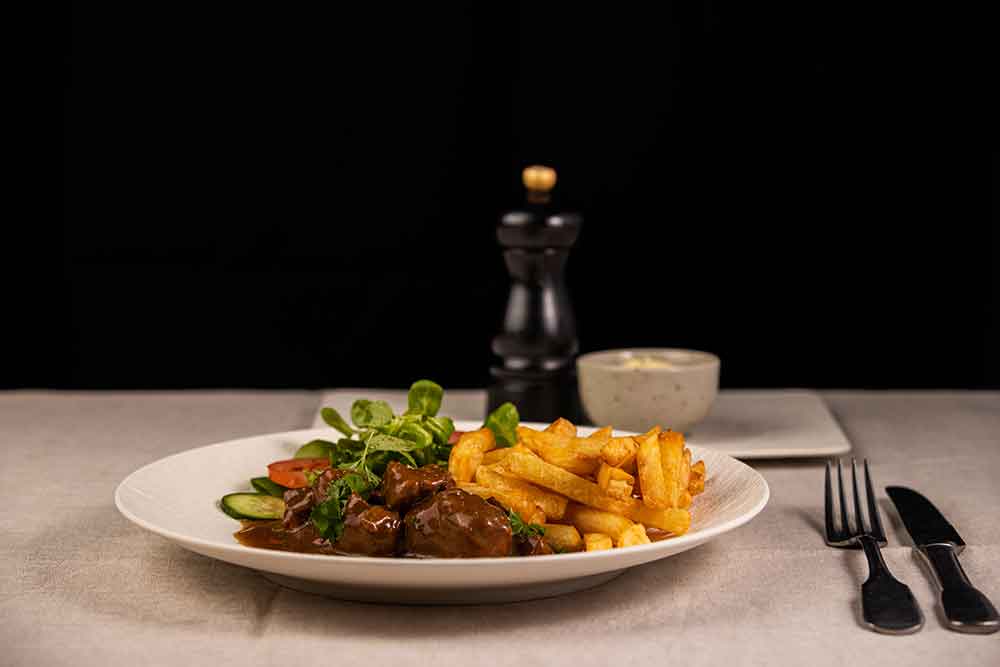
Stoofvlees (Flemish Beef Stew) + Dubbel
One of the more traditional Flemish dishes, stoofvlees, is a rich, traditional beef stew made with beer.
“What is always funny is that everybody has their own recipe,” says Verbeken, noting some add gingerbread, others mustard, and some like to add dark beer, while others swear by table beer. “Everybody has their own way of making it, and, of course, everyone has the best!”
Verbeken recommends pairing this decadent stew with a dark beer, such as a dubbel or a blonde ale.
A well-recognized Trappist beer, dubbels (along with tripels), began to emerge in the mid-1800s from monasteries such as Westmalle and Westvleteren. At the simplest level, while the Belgian single is a lower-ABV (4.8-6%, according to the BJCP) blonde ale with a distinct yeast expression, a Belgian dubbel registers a reddish-copper with a maltier backbone and a mid-level ABV (6.5-7%, according to the BJCP). With dubbels, monks wanted a better beer to drink at their table, doubling the ingredients—malts and hops.
Given complementary flavors, this style of dark beer pairs well with a dark stew. But a blonde could also work based on how you make this traditional Flemish dish.
“If you make it really pure and meat-forward, you could go with a rounder blonde beer,” he says. “But if you’re going to put in a lot of spices and dark beer, then, of course, you’re better with a dubbel.”
Verbeken recommends a Brouwerij Westmalle Dubbel because it’s the only Trappist brewery in Flanders.
Chicory (Endive) + Saison
Photography courtesy of Visit Flanders
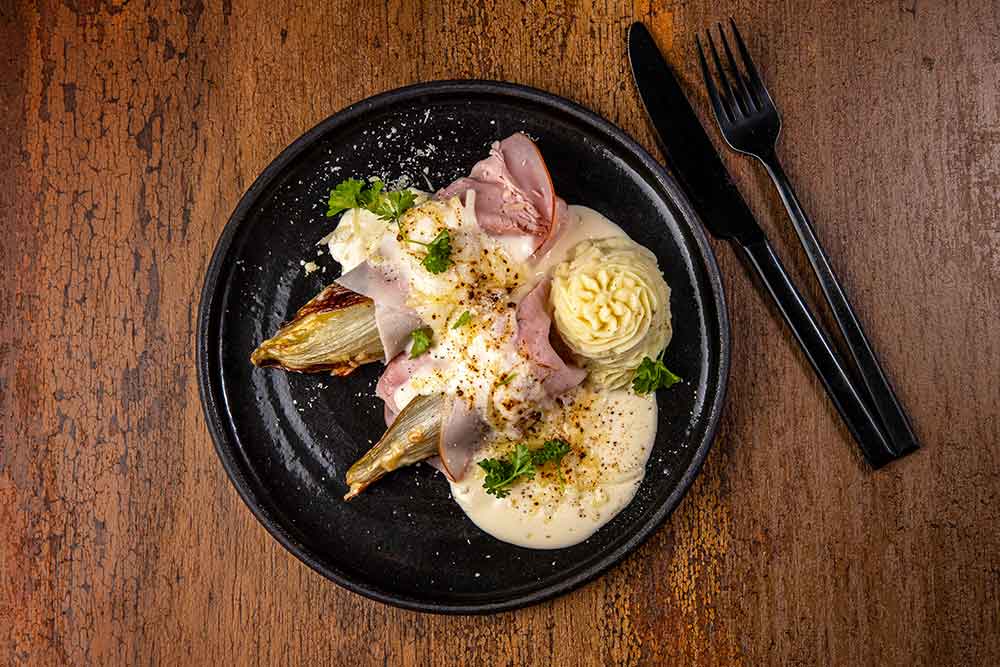
In season from around October to the end of March, chicory or Belgian endive becomes very popular in the winter.
“We eat it every week,” says Verbeken
A bit laborious to grow, Belgian endive comes from local farms all over Flanders.
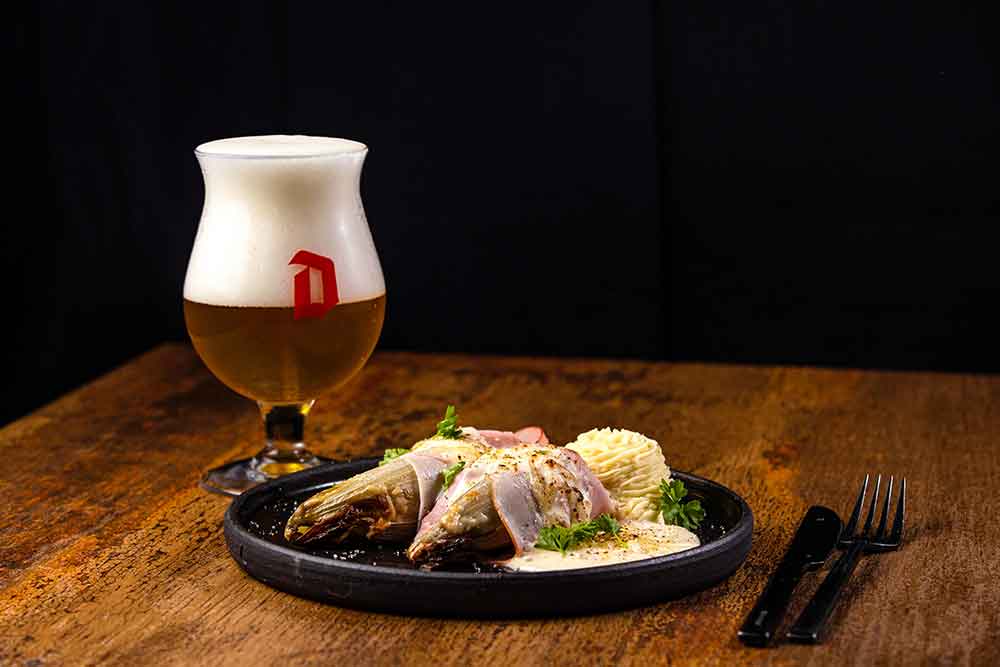
A typical preparation called hesperollen includes cooking the endive before rolling it in a slice of ham, adding cheese sauce, and lightly torching it in the oven (au gratin-style).
Verbeken likes to pair endive with a saison.
“It’s a really good combination because you have a complementary bitterness with the endives,” says Verbeken. “But at the same time, the saison is also really dry, so it cleanses the palate after that really creamy cheese sauce.”
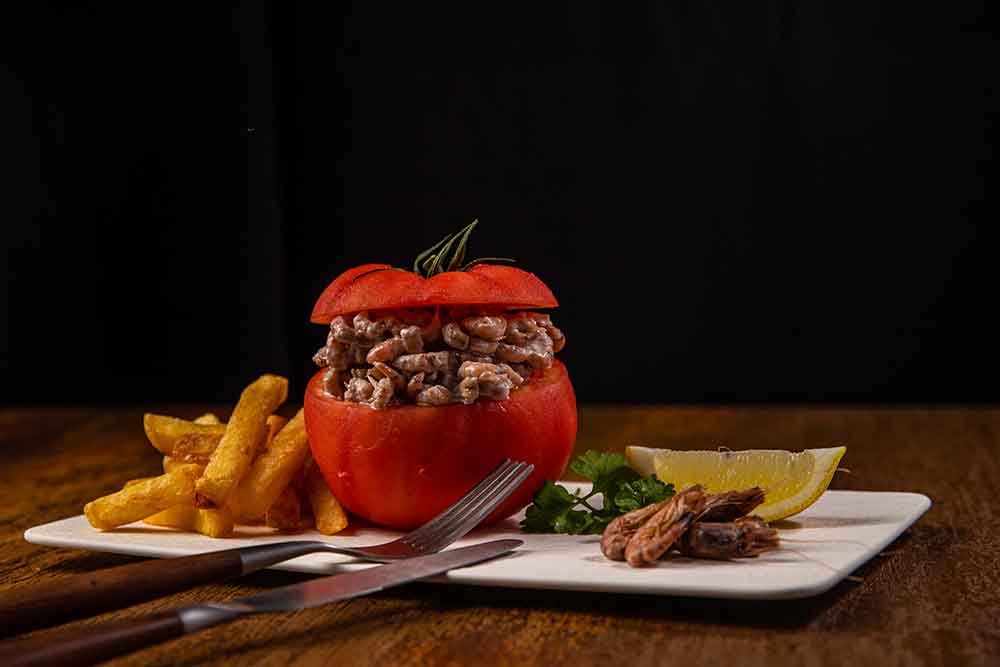
Tomate Crevettes + Oud Bruin
Photography courtesy of Visit Flanders
Another local ingredient from small boat fisherman, North Sea gray shrimp, is the star in a tomate crevette. The summer dish requires hollowing out a tomato, then stuffing it with fresh North Sea shrimps, a bit of mayonnaise, and some frites on the side.
“It’s really beautiful,” says Verbeken wistfully.
Without hesitation, Verbeken says you should pair this seafood-forward dish with the Flemish brown sour known as oud bruin.
Popular in the Eastern region of Flanders, oud bruin is a dark reddish-brown sour Belgian brown ale known for its complex compilation of robust malt and fruity esters. Typically, a base of Pils and dark cara malts or black or roast malt contributes to the color and tasting notes, while the addition of Saccharomyces and Lactobacillus adds that characteristic sourness.
According to the Beer Judge Certification Program, oud bruins are often aged and blended in stainless-steel vats to round out their sourness. Thanks to their grace through aging, oud bruins were often referred to as “Provision Beers,” making them the perfect sour starter for those new to the style. Especially because flavor profiles often play in the sweeter range of toffee, dried dark fruits, caramel, and treacle.
Perhaps the most iconic version, Brouwerij Liefmans oud bruin, called Goudenband, dates back to the 1600s. Often called “The Champagne of Dark Beers,” Liefmans’ version more recently won gold at the 2014 Brussels Beer Challenge and was named the Best Belgian Beer.
Hop Culture had a chance to visit Liefmans several years ago on a trip to Belgium to see how the historic Belgian brewery makes its Flemish brown sour ale. Unique to Liefmans’ oud bruin, the beer ferments in open-top fermenters, with windows painted blue to repel insects and let in the naturally occurring yeast. As the beer ferments, a crust of yeast forms on the top. Because Liefmans harvests that yeast off the top, skimming it off to vats below for repitching, a piece of history goes into every batch. The brewery’s oud bruin matures in the cellar for four to twelve months.
But Liefmans’ isn’t the only example of this classic brown ale.
For this pairing, Verbeken, who recommends a classic Rodenbach or VanderGhinste Roodbruin, says, “There’s nothing better.”
Whichever brown sour you choose, Verbeken just cautions that you shouldn’t go too high in acidity for fear of marring the clean, briney flavor of the shrimp.
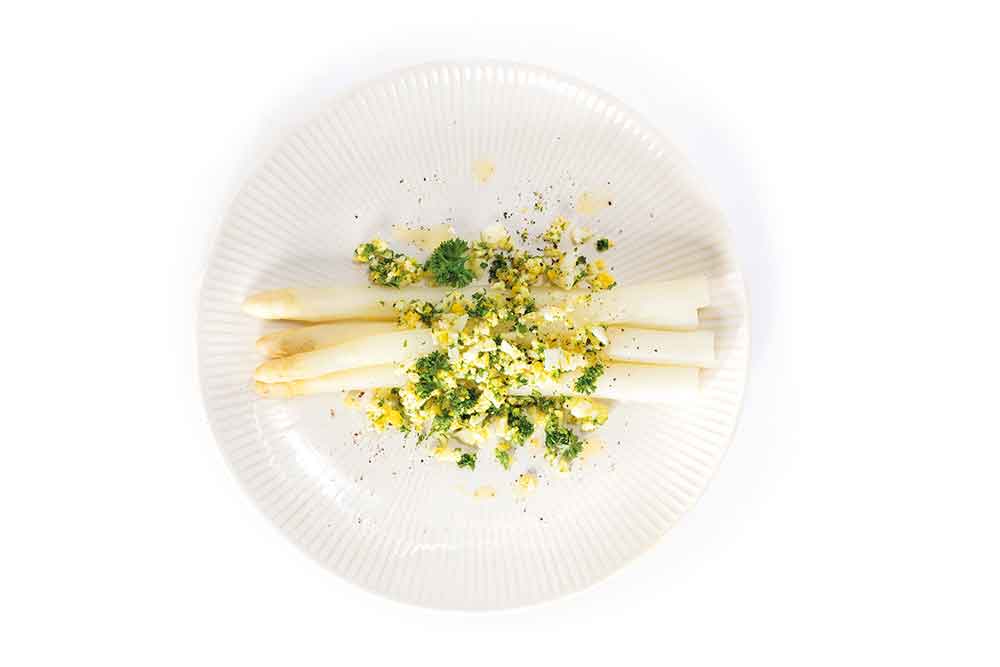
White Asparagus + Oude Geuze
Photography courtesy of Visit Flanders
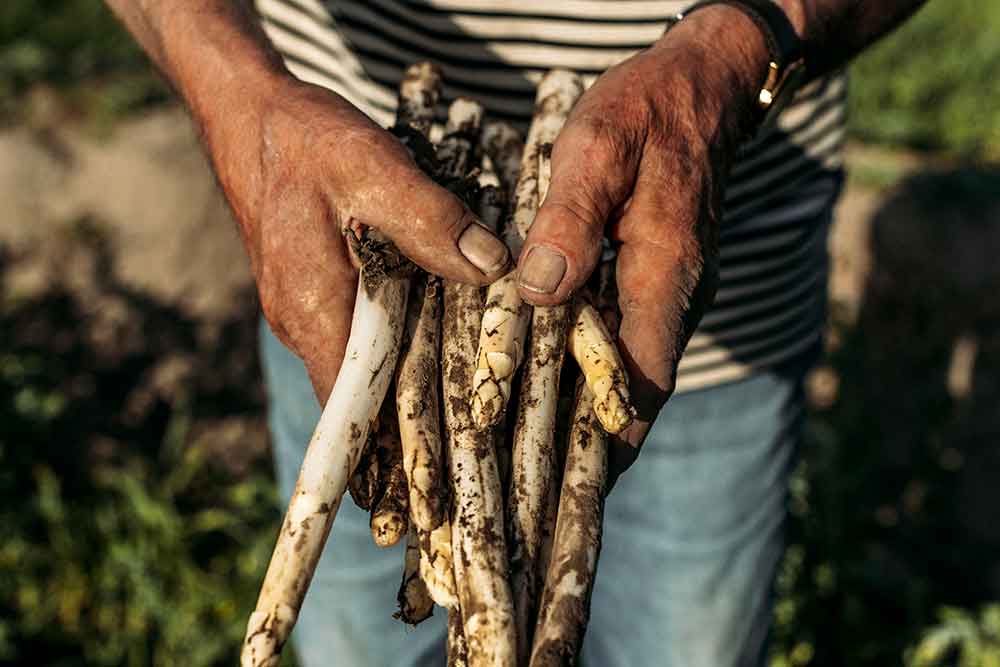
“When the endive stops, the asparagus begins,” says Verbeken with a smile. “It’s insane; every restaurant will have it on the menu.”
Especially the area between Leuven and Antwerp, according to Verbeken, noting that the region has a very dry sandy soil ideal for cultivating white asparagus.
The classical preparation of this dish, called asperges op Vlaamse wijze, includes mixing the cooked, hardy vegetable with mashed hard-boiled eggs, butter, and chopped parsley.
Verbeken suggests eating this dish alongside an oude geuze, such as Boon Oude Geuze, because it is readily available. “But, of course, there are so many others,” notes Verbeken, adding that his top three geuzes at the moment, in no particular order, are Boerenerf Oude Gueuze, Tilquin Oude Gueuze, and 3 Fonteinen Oude Geuze.
Falling under the all-encompassing term lambic, geuze or gueuze is a blend of one, two, and three-year-old lambic. A farmhouse style ale, geuzes are known for their combination of unmalted wheat, Pilsner malt, and aged hops, which act as a preserving agent.
Traditionally spontaneously fermented with wild yeast, geuzes have a complex character that’s often described as barnyard hay, horse blanket, funky, and earthy.
A style iconic to Belgium, geuze specifically comes from the Pajottenland, southwest of Brussels, and the Senne River valley. Consider this beer style akin to Champagne in France, where, under strict laws, a producer can use the name Champagne only if they produce it within the Champagne region. If the liquid comes from anywhere else, it is considered only sparkling wine. Similarly, lambic should really refer to this style of beer made within the Senne River valley.
Pouring a golden color, geuze is more carbonated than lambic and, with its light-to-medium acidity, should present some of those sour characteristics without going mouth-puckeringly over the top.
It’s that pleasant, but balanced sourness that makes it perfect to pair with this Flemish white asparagus dish.
“The butter and boiled eggs add this creaminess, but at the same time, the asparagus have a really nice minerality,” says Verbeken. “I would definitely go for the oude geuze because it’s not strongly sour but has some really good balance.”
Verbeken loves how the minerality of an oude geuze complements that of the asparagus. “But you also have the contrast of the butter and the egg, so it’s really savory with the acidity of the geuze,” he says. “You can go both ways at the same time!”
He likens the pairing to a fine white wine.
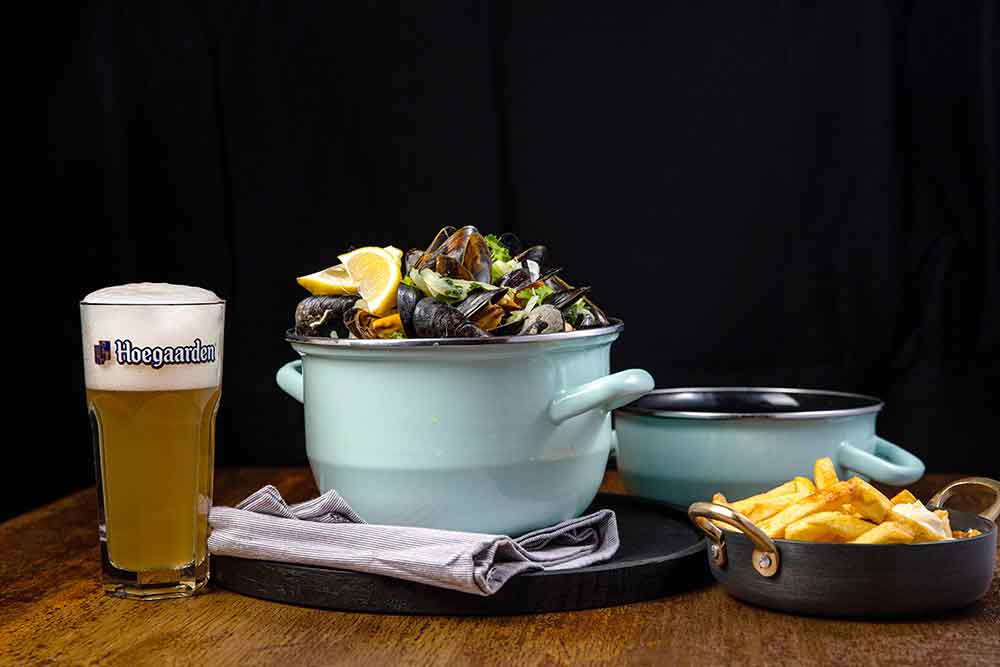
Mussels + Geuze
Photography courtesy of Visit Flanders
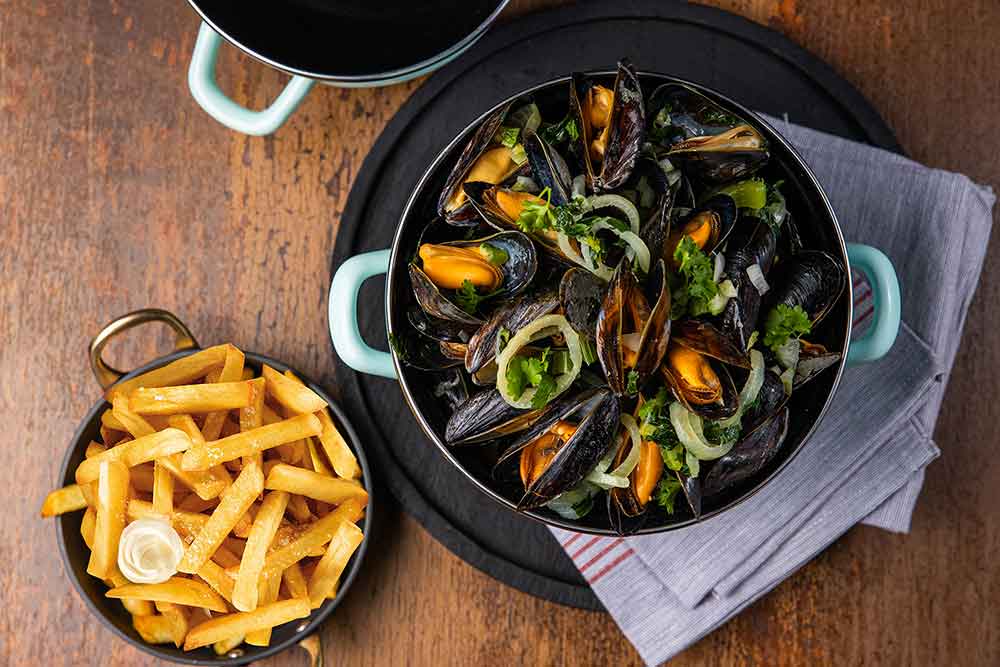
Typically eaten in the summer, mussels are another popular dish in Flanders.
Verbeken says he likes his natuur, which means just with onion, celery, and spices like black pepper, thyme, and salt. “But in a restaurant specializing in mussels, they’ll have more than ten preparations,” explains Verbeken. “The base is always the same—cook them in a pot with a lid on medium-high fire, and add whatever you fancy.”
To complement this Flemish dish, Verbeken recommends a beautiful geuze. “They will all work with the salty, mineral, savory taste of the mussels,” he says simply. “Mussels with geuze is a really good combination!”
Bringing Beer and Belgium to the Table
For Verbeken, pairing beer with Flemish food isn’t about following strict rules—it’s about enhancing the ingredients already on the plate. Whether it’s the refreshing dryness of a saison cutting through a creamy endive dish or the bright minerality of an oude geuze complementing white asparagus, the best pairings highlight the flavors that make both the food and beer special.
Rooted in seasonality, tradition, and local pride, Flemish cuisine offers countless opportunities to explore Belgium’s remarkable brewing heritage.
Start with these classic combinations, and you’ll quickly discover why beer belongs at every table in Flanders.
Editor’s Note: This piece was written in collaboration with our friends at Visit Flanders

About The Author

Grace Lee-Weitz
Currently Drinking:
Fort Point Beer Co. KSA
Grace is the Senior Content Editor for Hop Culture and Untappd. She also organizes and produces the largest weeklong women, femme-identifying, and non-binary folx in craft beer festival in the country, Beers With(out) Beards, and the first-ever festival celebrating the colorful, vibrant voices in the queer community in craft beer, Queer Beer. An avid craft beer nerd Grace always found a way to work with beer. After graduating with a journalism degree from Northwestern University, she attended culinary school before working in restaurant management. She moonlighted as a brand ambassador at 3 Sheeps Brewing Co. on the weekends before moving into the beer industry full-time as an account coordinator at 5 Rabbit Cerveceria. Grace holds her Masters degree in the Food Studies program at NYU.